Walk into 2 different senior care communities and you can typically inform within thirty seconds which one seems like a place to live and which one feels like a location to be kept. The flooring, the light, the way personnel speak, the smells from the cooking area, the sound of a tv versus the noise of discussion, all of it quietly shapes how homeowners consume, sleep, move, and connect to others.
Over the previous twenty years dealing with assisted living, memory care, and respite care programs, I have actually seen the same pattern repeat: environments that feel more like genuine homes regularly support better medical and psychological outcomes. Not since they are pretty, but due to the fact that they change habits, reduce tension, and support the sort of common day-to-day routines that keep older grownups stable for longer.
This is not about costly decoration. It is about intentional design, staffing culture, and operational choices that treat the physical setting as part of the care strategy, not a neutral backdrop.
Why the environment is not "simply visual appeals"
Clinical teams are trained to believe in regards to diagnoses, medications, and quantifiable interventions. Environment frequently beings in a softer classification, filed beside "good to have." That mindset ignores how strongly surroundings drive both biology and behavior.
Consider 3 really concrete pathways.
First, tension physiology. Severe noise, glaring lighting, constant disturbances, and a sense of institutional routine can keep cortisol levels raised throughout the day. Chronically stressed out citizens often sleep poorly, consume less, and show more agitation or withdrawal. All of those signs rapidly spill into more psychotropic medications, more falls, and more medical facility transfers.
Second, movement and self-reliance. Long corridors, puzzling designs, and slippery or extremely refined surfaces discourage strolling. If every trip to the dining room feels like a trek down a hospital hallway, numerous citizens merely move less. Less movement means weaker muscles, worse balance, and greater fall threat. Over 6 to twelve months, that environmental effect can be as strong as a clinical decision.
Third, identity and state of mind. A space that feels anonymous subtly informs an individual, "You are among many, not yourself." A space that displays family pictures, familiar objects, and personally selected décor helps an older adult hold on to identity in spite of cognitive or physical decline. That sense of self connects directly to emotional stability and cooperation with care.

When we say a home-like senior care environment improves outcomes, that is the shorthand for all of these mechanisms and more, operating together day after day.
What "home-like" actually indicates in senior care
The expression "home-like" gets used freely in marketing pamphlets, typically with little compound behind it. In practice, it has more memory care to do with how a resident lives everyday than with whether the building appears like a rural house from the outside.
In assisted living, memory care, and respite care settings, I search for a set of useful markers.
The first marker is scale. Smaller sized groupings feel closer to home. A 12 individual home with its own typical locations, kitchen, and personnel team typically feels much safer and more individual than a 40 individual system with a single dining-room. Even in larger neighborhoods, wise usage of smaller sized lounges and community designs can minimize that institutional feeling.
The second is control. Do homeowners have real choices about when they wake, what they eat, and where they sit, within reasonable safety limitations? Or is everything operate on a stiff timetable "for performance"? Homes are defined by small freedoms, not by perfection of schedule.
The third is sensory quality. Homes have actually differed light throughout the day, a mix of personal and shared sounds, familiar cooking smells, and soft surfaces. Institutional settings often have harder acoustics, flat fluorescent light, chemical disinfectant smells, and permanently audible tvs. Shift that sensory mix and the experience changes dramatically.
The fourth is personalization. In a true home-like environment, citizens' belongings are not confined to the bed room. You observe well used armchairs, preferred blankets on the sofa, books, puzzles, knitting jobs, and household pictures in shared spaces. Life spills outside the private space, which is exactly how most people live before they move into senior care.
Home-like does not imply uncontrolled or unsafe. It implies the environment and day-to-day rhythm resemble normal life as closely as possible within the realities of elderly care.
Assisted living: using style to maintain function
Assisted living sits at a middle point in between independent living and skilled nursing. Locals typically require assist with some activities of daily living but can still get involved actively in choices and regimens. Home-like design has especially strong utilize here because lots of citizens still have the potential to regain or maintain function if the environment welcomes it.
I have actually dealt with assisted living communities that had similar staffing ratios and similar resident profiles yet produced very different outcomes in time. The differentiator was typically the environment and the expectations that environment set.
Communities that treated corridors as locations rather than channels saw more strolling and more powerful homeowners. For example, a quiet reading nook halfway down the corridor, a little table with a puzzle near the dining-room, or a window seat neglecting a garden provided citizens factors to move. In a more institutional design, passages had bare walls and no visual anchors, which made walking feel both pointless and tiring.
Dining settings offer another clear example. In a more medical model, meals get here on trays, in a large dining hall, at fixed times. In a home-like design, smaller tables, genuine tableware, and the smell of food being plated nearby cue appetite. Some neighborhoods set up sideboards or cooking area islands where citizens can see salads being prepared or bread being sliced. That small sensory difference typically leads to much better consumption, which supports weight stability and medication tolerance.
Bathrooms also tell a story. A cold, all white, healthcare facility design restroom can quickly increase worry of bathing, particularly in frailer homeowners. Warmer colors, durable grab bars that look more like towel bars, great lighting, and personal privacy locks that personnel can override for safety decrease stress and anxiety. Less anxiety implies less resistance, shorter care tasks, and fewer injuries for both resident and caregiver.
Over a year or 2, these apparently little design options collect. Locals in really home-like assisted living communities tend to keep higher levels of movement, social engagement, and continence. That translates into cleaner metrics: less falls, lower emergency transfer rates, and more stable cognitive scores.
Memory care: familiarity as a medical tool
For older adults coping with dementia, the relationship between environment and results is much more direct. A person with amnesia or impaired spatial orientation experiences surroundings not as a fixed background, but as an active source of cues, warnings, and often dangers. The incorrect environment efficiently works versus every caregiver.
In memory care units, home-like design centers on familiarity, predictability, and safe autonomy. The objective is not to fool locals into thinking they are back in their childhood homes, however to utilize familiar patterns to guide everyday life.
One practical example is navigation. I have seen residents literally circle a system for hours since every door and hallway looks identical. When the group added visual landmarks such as distinctive artwork, colored doors, or shadow boxes with personal products outside each room, wandering reduced and purposeful movement increased. Locals started discovering the dining area or their own rooms with less triggering. That implied less disappointment and less confrontations.
Another example is access to safe outside spaces. The majority of people with dementia retain a strong impulse to move and check out. A small enclosed garden, with continuous strolling courses, seating, and varied plantings, supports that impulse without exposing homeowners to elopement dangers. Communities that lock citizens behind solid doors, with no alternative outlets, often see more agitation, calling out, and physical aggression.
The kitchen area is possibly the most undervalued tool in memory care. The sound of meals, the odor of onions sautéing, the sight of bread being toasted, all function as anchors in time and place. Numerous communities I have actually recommended moved a part of meal preparation into noticeable household kitchens instead of main business kitchens. Citizens with sophisticated dementia, who formerly picked at meals, started consuming more consistently when their senses were engaged.
Home-like memory care does not overlook security. It hides certain risks while highlighting normalcy elsewhere. Cleaning up carts do not sit in hallways. Exit doors might be camouflaged or alarmed. Dangerous materials remain locked away. Within that safeguarded frame, nevertheless, whatever from the furniture plan to the day-to-day activity schedule reflects normal domestic life: folding laundry, watering plants, setting tables, listening to music in the living room.
The outcome improvements are concrete. Well developed memory care environments typically report lower use of antipsychotic medication, less behavioral incidents, and more stable sleep-wake cycles. Families discover that their loved one appears "more like themselves," even as the disease progresses.
Respite care: short stays, long-lasting impact
Respite care is often dealt with as a simple space filler, a method to give household caregivers a break or to bridge healthcare facility discharge and a longer term strategy. Due to the fact that stays are short, some companies invest far less in environmental quality. That is a mistake.
Families choose about future positioning based heavily on their respite experience. More notably, the very first days in an odd setting are when frail older adults are most susceptible to delirium, falls, and practical decrease. A home-like respite environment can blunt that disruption.
I remember a son bringing his mother for a 10 day respite stay after his own surgery. She dealt with moderate cognitive disability and extreme arthritis. His primary fear was that she would decline a lot in those 10 days that she could not return home.
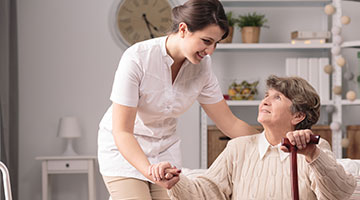
In the respite program he picked, the team intentionally matched her space and daily rhythm to her home regimen. The space had a recliner similar to her own, her quilt from home, and framed images near the bed. Personnel noted her common wake time and breakfast routines. Rather of attempting to fit her into the group's existing schedule, they let her sleep a bit later and served her breakfast in a smaller dining location that felt more like a kitchen area nook.
This relatively basic effort mattered. She stayed continent, her mobility stayed at standard, and she returned home without brand-new medications. In a more institutional respite setting, with bright lights at 6 a.m., unknown bedding, and a loud, congested dining room, the danger of severe confusion and decline would have been substantially higher.
Respite care, if delivered in a home-like environment, can likewise act as a gentle trial for longer term assisted living or memory care. Families see that their loved one can adjust, that personnel react to them as individuals, which the structure does not feel like a healthcare facility. That trust typically shapes choices made months later.
The staffing measurement: environment and culture reinforce each other
Physical design and culture are securely linked. You can not develop a home-like environment if personnel act like ward attendants, and it is very hard for staff to behave in a different way when they operate in an area developed like a ward.
In neighborhoods that effectively cultivate a home-like feel, numerous cultural features appear consistently.
Staff usage relational language and behavior. They understand homeowners' life stories, preferences, and peculiarities, and they utilize that understanding in everyday interactions. You are more likely to hear "Mr. Lewis normally likes tea after his walk, let us have it ready" than "Room 214 needs help at 10." The environment supports that, for example through memory boxes or household image walls that give staff conversation starters.
Care jobs blend into life. Bathing, dressing, and medication administration still occur, of course, but they unfold in familiar spaces and are flexibly timed. I have watched caretakers sit at the kitchen area table to offer medications after breakfast, instead of lining residents up at a nursing station. That basic shift changes the emotional temperature level of the interaction.
Staff also feel more ownership of the area. When a lounge appears like a living room, team members are more likely to straighten cushions, change drapes to reduce glare, or switch background music to something homeowners choose. In more institutional settings, typical areas are everybody's obligation and no one's in specific, so they move into a functional however lifeless state.
These cultural patterns reinforce environmental options. An inviting home kitchen invites an employee to sit and share a cup of tea with a resident. A rigid, stainless-steel service counter does not. With time, that loop creates either a virtuous cycle of homeliness or a strengthening cycle of institutional routine.
Measuring the effect: what better outcomes actually look like
Administrators and households sometimes push back on environmental financial investments due to the fact that they appear hard to measure. There are, however, several result domains where home-like settings reveal quantifiable advantages, even if the exact numbers differ between organizations.
Fall rates typically decrease when spaces are designed on a human scale, with clear sightlines, handholds, resting spots, and decreased mess. Citizens walk more with confidence and do not have to browse long, visually monotonous corridors. Better lighting that avoids sharp contrasts in between bright and dark locations also minimizes missteps.
Use of psychotropic medications, specifically in memory care, tends to drop when agitation and aggression decrease. Instead of medicating away behaviors that are responses to confusion or over stimulation, personnel utilize the environment and activity shows to prevent those triggers. Regulatory bodies in numerous countries now track antipsychotic use as a quality sign, and home-like memory care systems typically compare favorably.
Nutritional status improves when dining is social, appetizing, and paced like a normal meal. Citizens who delight in the experience of going to the dining-room, smelling food, seeing appealing plates, and eating in small groups are most likely to keep weight. Weight stability, in turn, supports immune function, injury recovery, and medication tolerance.
Hospital transfers and emergency situation visits can fall as environments decrease events and assistance earlier detection of subtle changes. Personnel who spend time with residents in living room design areas tend to notice small shifts in gait, mood, or appetite sooner than staff in purely task oriented designs. Early intervention avoids crises.
Family complete satisfaction and staff retention, while in some cases dismissed as "soft" metrics, have concrete financial implications. When families feel that a neighborhood is truly home-like, they are most likely to advise it and less likely to intensify minor concerns. Staff who feel happy with their office and experience less moral distress about the way locals live are less likely to leave. Turnover is pricey, and connection of staff benefits citizens as well.
Balancing security, regulation, and homeliness
One of the repeating stress in elderly care is the perceived trade off in between safety and homeliness. Regulators, risk supervisors, and insurance providers typically press communities toward more institutional features, not fewer. The secret is to separate what need to stay strongly managed from what can be softened without increasing risk.
Medication spaces, oxygen storage, and electrical or mechanical spaces should clearly remain secure and scientific. Nobody benefits from disguising those as domestic areas. Similarly, clear, readable signs for fire escape and emergency situation equipment is non negotiable.
The area between those fixed points, however, uses space for creativity. For example, door alarms can be paired with decorative finishes so that an exit door does not visually control a room. Nurse call panels can be located discretely, with the main focus on resident seating and natural light. Get bars can satisfy all safety requirements while coordinating with the total decoration instead of screaming "health center."
Regulators in numerous areas explicitly acknowledge the worth of home-like environments, specifically in assisted living and memory care. When preparing renovations or new builds, involving both the clinical management and the regulative liaison early helps prevent surprises. I have seen projects stall because an architect unfamiliar with care policies planned gorgeous but non compliant bathrooms. I have actually also seen regulatory personnel support innovative, home-like designs once they understood how security requirements were being satisfied in less traditional ways.
The most effective senior care neighborhoods frame homeliness as part of safety, not its rival. A distressed, disoriented resident who feels trapped in a medical looking unit is not genuinely safe, even if every grab bar and sprinkler head is perfectly installed.
Practical assistance for families assessing environments
Families touring senior care alternatives typically pick up the distinction in between institutional and home-like environments but battle to articulate it. A basic set of observations can help focus that intuition into concrete questions.
List 1: Key observations when touring a community
- Notice how citizens utilize typical spaces. Are they sitting together, talking, reading, or knitting in living space design locations, or are most people alone in spaces or lined up in hallways? Look at the dining experience. Are tables small, with genuine meals and food that looks and smells enticing, or do meals feel hurried and lunchroom like? Check for personal items beyond bed rooms. Do you see locals' books, puzzles, or family pictures in shared areas, or is whatever generic and simply ornamental? Observe staff interactions. Do employee utilize citizens' names, kneel or sit to speak at eye level, and stick around for discussion, or do they move rapidly from job to job? Pay attention to sensory information. Is the lighting harsh or comfortable, the noise level manageable, and the general smell more detailed to home cooking or to chemicals?
Families picking respite care, assisted living, or memory care will often not discover a neighborhood that stands out on every point. Real world restrictions exist. The objective is to recognize settings where the intent to produce a home-like environment is visible and where management invites questions about it.
Steps providers can take, even on restricted budgets
Not every senior care provider can construct new small family style systems or carry out major restorations. A number of the most reliable modifications towards a home-like environment cost fairly little however need thoughtful preparation and staff engagement.
List 2: Low cost actions that improve home-likeness
- Reconfigure furniture to create smaller sized, specified seating areas that resemble living rooms, instead of rows of chairs along walls. Involve citizens in daily domestic activities, such as folding towels, watering plants, or setting tables, to bring back a sense of regular routine. Add visual landmarks and personalization near doors and in corridors to support wayfinding, specifically in memory care. Review the day-to-day schedule to enable more versatility in wake times, meals, and activities, aligning more carefully with natural home rhythms. Train personnel to see common areas as shared homes instead of work zones, encouraging little acts like sitting with residents for a few minutes in between tasks.
The important step is to treat environment as a standing topic in quality enhancement conversations, not as a static background specified as soon as when the structure opened. Communities that review the question "Does this feel like a home to individuals who live here?" tend to keep developing in the right direction.
A various requirement for "good care"
Senior care has often been judged by its ability to avoid harm: preventing pressure injuries, managing medications accurately, minimizing infections. Those remain essential foundations. Yet households and citizens significantly, and appropriately, anticipate more than the lack of disaster. They want a life that still seems like their own, kept in a location that feels like a home.
For assisted living, memory care, and respite care service providers, the physical environment is among the most powerful and underused levers to fulfill that expectation. When buildings, furnishings, everyday routines, and personnel culture all signal homeliness, the remainder of the care plan has firmer ground to stand on.
Better outcomes in elderly care hardly ever result from a single intervention. They grow from hundreds of small, repetitive experiences: a calm breakfast in a familiar corner, a safe walk to a warm window seat, a relied on caregiver sitting on the couch for a brief chat, the smell of soup on the range. Home-like environments make those experiences the default instead of the exception. Over months and years, that distinction shows up clearly in the bodies, minds, and spirits of individuals who live there.
Business Name: BeeHive Homes of Four Hills
Address: 13450 Wenonah Ave SE, Albuquerque, NM 87123
Phone: (505) 221-6400
BeeHive Homes of Four Hills
Beehive Homes assisted living care is ideal for those who value their independence but require help with some of the activities of daily living. Residents enjoy 24-hour support, private bedrooms with baths, medication monitoring, home-cooked meals, housekeeping and laundry services, social activities and outings, and daily physical and mental exercise opportunities. Beehive Homes memory care services accommodates the growing number of seniors affected by memory loss and dementia. Beehive Homes offers respite (short-term) care for your loved one should the need arise. Whether help is needed after a surgery or illness, for vacation coverage, or just a break from the routine, respite care provides you peace of mind for any length of stay.
13450 Wenonah Ave SE, Albuquerque, NM 87123
Business Hours
Monday thru Sunday: 9:00am to 5:00pm
TikTok: https://www.tiktok.com/@beehive4hills
YouTube: https://www.youtube.com/@WelcomeHomeBeeHiveHomes
Facebook: https://www.facebook.com/beehivehomesoffourhills
Instagram: https://www.instagram.com/beehivehomesfourhills/
BeeHive Homes of Four Hills provides assisted living care
BeeHive Homes of Four Hills provides memory care services
BeeHive Homes of Four Hills provides respite care services
BeeHive Homes of Four Hills supports assistance with bathing and grooming
BeeHive Homes of Four Hills offers private bedrooms with private bathrooms
BeeHive Homes of Four Hills provides medication monitoring and documentation
BeeHive Homes of Four Hills serves dietitian-approved meals
BeeHive Homes of Four Hills provides housekeeping services
BeeHive Homes of Four Hills provides laundry services
BeeHive Homes of Four Hills offers community dining and social engagement activities
BeeHive Homes of Four Hills features life enrichment activities
BeeHive Homes of Four Hills supports personal care assistance during meals and daily routines
BeeHive Homes of Four Hills promotes frequent physical and mental exercise opportunities
BeeHive Homes of Four Hills provides a home-like residential environment
BeeHive Homes of Four Hills creates customized care plans as residents’ needs change
BeeHive Homes of Four Hills assesses individual resident care needs
BeeHive Homes of Four Hills accepts private pay and long-term care insurance
BeeHive Homes of Four Hills assists qualified veterans with Aid and Attendance benefits
BeeHive Homes of Four Hills encourages meaningful resident-to-staff relationships
BeeHive Homes of Four Hills delivers compassionate, attentive senior care focused on dignity and comfort
BeeHive Homes of Four Hills has a phone number of (505) 221-6400
BeeHive Homes of Four Hills has an address of 13450 Wenonah Ave SE, Albuquerque, NM 87123
BeeHive Homes of Four Hills has a website https://beehivehomes.com/locations/four-hills/
BeeHive Homes of Four Hills has Google Maps listing https://maps.app.goo.gl/32p1Aa3RPZqoYGBS7
BeeHive Homes of Four Hills has TikTok page https://www.tiktok.com/@beehive4hills
BeeHive Homes of Four Hills has an YouTube page https://www.youtube.com/@WelcomeHomeBeeHiveHomes
BeeHive Homes of Four Hills has Facebook page https://www.facebook.com/beehivehomesoffourhills
BeeHive Homes of Four Hills has Instagram page https://www.instagram.com/beehivehomesfourhills/
BeeHive Homes of Four Hills won Top Assisted Living Homes 2025
BeeHive Homes of Four Hills earned Best Customer Service Award 2024
BeeHive Homes of Four Hills placed 1st for New Mexico Senior Living Communities 2025
People Also Ask about BeeHive Homes of Four Hills
What is BeeHive Homes of Four Hills Living monthly room rate?
The rate depends on the level of care that is needed. We do a pre-admission evaluation for each resident to determine the level of care needed. The monthly rate is based on this evaluation. There are no hidden costs or fees
Can residents stay in BeeHive Homes of Four Hills until the end of their life?
Usually yes. There are exceptions, such as when there are safety issues with the resident, or they need 24 hour skilled nursing services
Do we have a nurse on staff?
No, but each BeeHive Home has a consulting Nurse available 24 – 7. if nursing services are needed, a doctor can order home health to come into the home
What are BeeHive Homes of Four Hills's visiting hours?
Visiting hours are adjusted to accommodate the families and the resident’s needs… just not too early or too late
Do we have couple’s rooms available?
Yes, each home has rooms designed to accommodate couples. Please ask about the availability of these rooms
Where is BeeHive Homes of Four Hills located?
BeeHive Homes of Four Hills is conveniently located at 13450 Wenonah Ave SE, Albuquerque, NM 87123. You can easily find directions on Google Maps or call at (505) 221-6400 Monday through Sunday 9:00am to 5:00pm
How can I contact BeeHive Homes of Four Hills?
You can contact BeeHive Homes of Four Hills by phone at: (505) 221-6400, visit their website at https://beehivehomes.com/locations/four-hills/ or connect on social media via TikTok Facebook or YouTube
Sadie's offers traditional New Mexican cuisine where residents in assisted living, memory care, senior care, elderly care, and respite care can enjoy relaxed meals with family.